
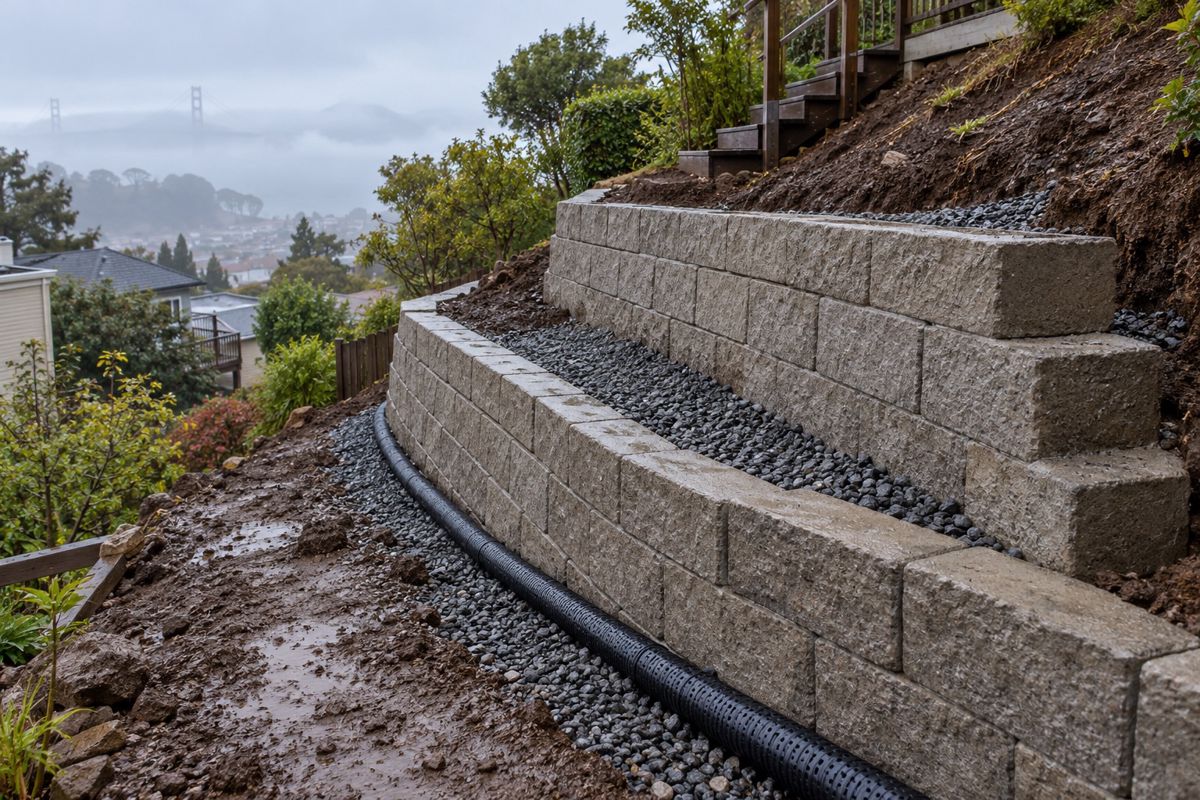
Why do walls and yards fail on San Francisco slopes?
Most wall problems come from water. Soil that fills with winter rain gets heavy, and a wall with nowhere for that water to escape takes on far more pressure than it was built for.
- No drainage behind the wall. Without gravel and a perforated pipe, water builds up and pushes the wall forward.
- Weak footing. A wall built on loose fill or too shallow a base can lean or settle.
- Wood in constant damp. Timber walls rot faster in fog and wet soil than in a dry climate.
- Slope movement. Steep or unstable ground may need an engineer to design the wall.
- Water sent to the wrong place. Discharging runoff onto a neighbor or into the street can cause trouble, and where water may go is regulated.
The area also sits in earthquake country, so structure matters. A wall that is built carefully with proper reinforcement is more likely to hold up through shaking and storms.