
Skip to content
Free written quotesLocal crews
Call now (415) 555-0126
San Francisco, CA (415) 555-0126
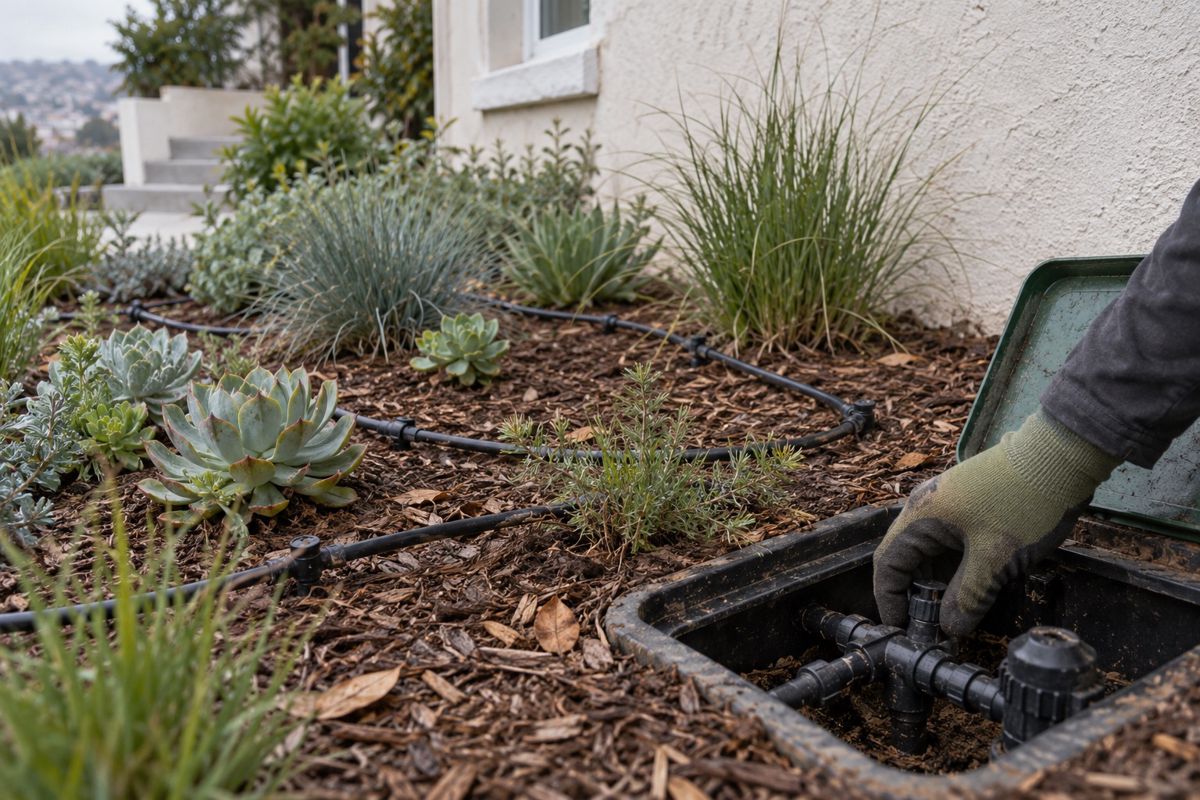
Drip irrigation lines and valve box in a planted bed beside a San Francisco house

Irrigation and sprinklers

Sprinkler system installation in San Francisco, sized for small yards

Drip lines, lawn zones, and controllers that give plants the water they need without wasting it in fog and wind.

  • Drip for beds, sprays only where useful
  • Smart controllers that follow the weather
  • Pressure and wind handled in the design

Step 1 of 3

What do you need?

What does sprinkler system installation involve in San Francisco?

An irrigation system delivers water to plants through pipes, valves, and either drip lines or spray heads, all run by a controller. In San Francisco, where yards are small and water is worth saving, most systems rely heavily on drip irrigation for beds and shrubs, with sprays or rotary nozzles used only on lawn areas.

The installation begins with a plan. The yard is divided into zones by plant type and sun exposure, since a lawn and a bed of succulents need very different amounts of water. Trenches are dug for pipe, valves are set in boxes, and the system is connected to the water supply with a backflow device where required. Heads and drip lines go in, the controller is programmed, and everything is tested.

A well-planned system is also quiet and mostly out of sight, which suits small city yards.

What irrigation problems are common in San Francisco?

The city has some conditions that make irrigation different from hot inland areas.

  • Overwatering. Fog and cool temperatures mean plants need less water than a controller set to a standard schedule delivers. Soggy soil causes root rot and fungus.
  • Wind. Wind pushes spray off target and wastes water. Low-angle nozzles and drip lines reduce this.
  • Pressure differences. Water pressure can be high on low streets and weak on hills, so regulators or pressure-compensating parts may be needed.
  • Old systems. Leaks, broken heads, and outdated timers are common in older yards.
  • Mixed planting. Lawn, vegetables, and drought-tolerant plants on one valve cannot all be watered correctly.

Good zoning solves most of these. Our landscape design page explains how planting groups are planned so each zone makes sense.

Which parts of a system change the price?

You receive a written quote after a site visit. Prices are not listed here because the cost depends on the size and layout of your yard. Common factors include:

  • Number of zones and total area covered
  • Drip versus spray, since drip needs more fittings but wastes less water
  • Trenching through soil, rock, or beside paved areas
  • Backflow prevention, pressure regulators, and any plumbing connections
  • The controller, from a simple timer to a weather-based smart model
  • Working around existing hardscape, walls, and mature plants

If you are building a new lawn, plan irrigation first, so the pipes go in before turf. Our sod installation page covers that order of work. Where the project involves a new patio or wall, run irrigation sleeves under hard surfaces before they are built, which avoids cutting into new work later.

A small yard often takes one to three days. Larger properties, multiple zones, and sloped lots take longer. If the system goes in alongside other work, the schedule follows the rest of the project. Winter rain can delay trenching.

After installation, the controller needs seasonal attention. In San Francisco, watering needs drop sharply in the cool, wet months and rise during dry spells and warm weeks in late summer and fall. A weather-based controller adjusts for this automatically, and a rain sensor can pause watering during storms. Many owners also check the system a few times a year for leaks and clogged emitters.

New plants need more frequent water in their first season, and then the schedule can be reduced as roots settle in.

What should you expect on the day, and when should you call?

On installation day, expect trenching, pipe laying, and some temporary mess on the ground. The water is shut off for part of the day while the new line is connected. Crews fill trenches, test each zone, adjust heads, and show you how the controller works. Call 811 before digging starts so buried utility lines are marked.

Call when you see wet spots, dry patches, geysers from a broken head, or a water bill that jumped. Call when you are planting a new yard, switching to low-water plants, or tired of dragging hoses. Ask any contractor to show a current license and proof of insurance, and check whether the local water utility has rebates or rules for new systems.

You can browse all of our services from the home page.

Free written quotes
Local crews
Reliable scheduling
Tidy job sites

Questions about landscaping in San Francisco

Is drip irrigation better than sprinklers for San Francisco?

For beds, shrubs, and trees, drip is usually the better choice. It puts water at the roots, loses little to wind, and uses less overall. Sprays or rotary nozzles still make sense for lawn areas. Most yards end up with both, set up in separate zones so each gets the right amount.

Do I need a smart controller?

It is not required, but it helps. Weather-based controllers adjust watering to rain, temperature, and season, which suits a climate where fog and rain change needs a lot. They can reduce wasted water, and some water utilities offer rebates for them. Ask what is available in your area.

How do I get a quote for a sprinkler system?

Call or send the short form with your address and a short description of the plants you have. We visit, measure the yard, check water pressure, and then give you a written quote. If you already have a system, tell us what is not working so we can inspect it.

Can you repair or upgrade my existing system?

In many cases, yes. Broken heads, leaking valves, outdated timers, and zones that no longer match your planting can be fixed or changed without starting over. A site visit shows what is worth saving and what should be replaced, and the quote lists both options.

Does my irrigation system need a backflow device?

Most systems that connect to the drinking water supply need some kind of backflow protection, and local rules may require testing. The requirements depend on the system type and your water utility. We include the right device in the plan, but confirm current rules with the utility.

Request irrigation systems

Tell us what you need and we call you back.

No obligation.

Step 1 of 3

What do you need?

Ready when you are. Call now or request a quote online.

How it works

1

Tell us about the yard

Size, goals and any photos.

2

Site visit and quote

We walk the property and put the price in writing.

3

We do the work

Scheduled crew, cleanup included.