
Skip to content
Free written quotesLocal crews
Call now (415) 555-0126
San Francisco, CA (415) 555-0126
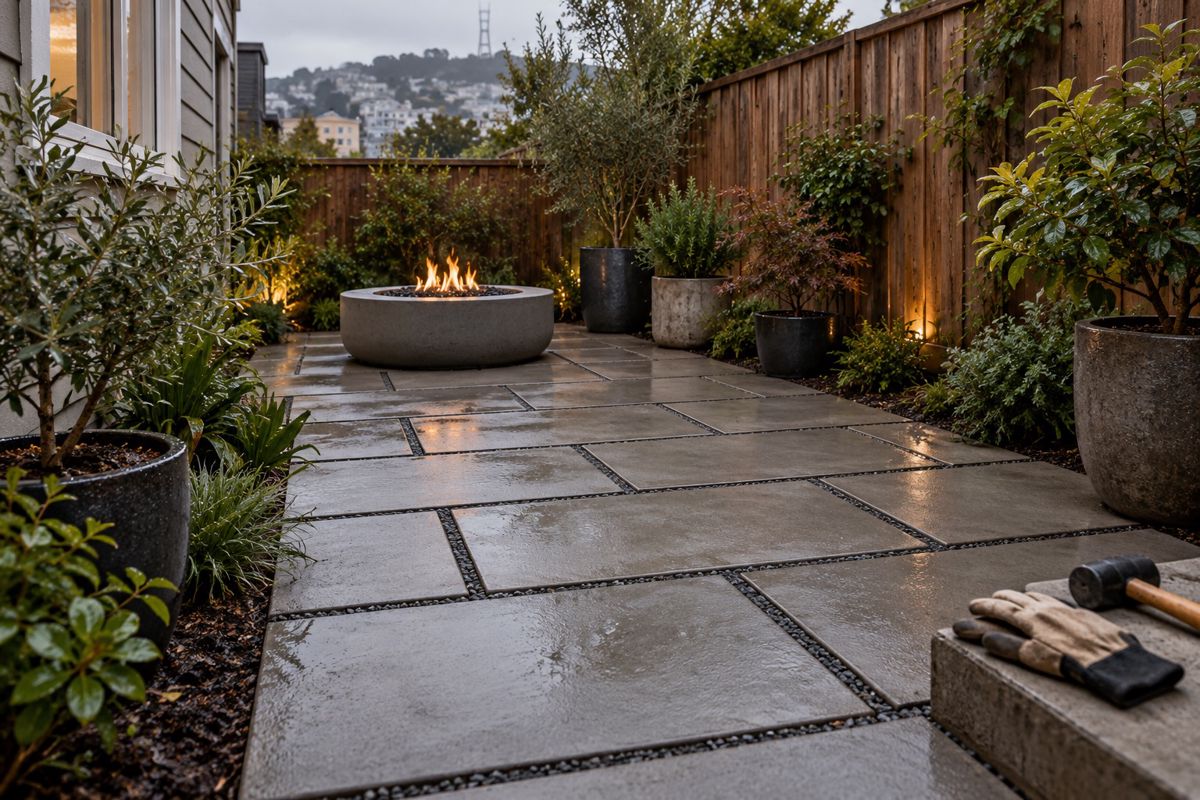
New paver patio with fire pit in a narrow San Francisco backyard

Pavers, patios and fire pits

Hardscape contractor in San Francisco for patios and paths

Paver patios, walkways, steps, and fire pits built on a solid base for damp, hilly, tight-access yards.

  • Built on a compacted base that drains
  • Surfaces chosen for fog and wet weather
  • Tight access and slopes planned in advance

Step 1 of 3

What do you need?

What does a hardscape contractor in San Francisco build?

Hardscape is everything in a yard that is not alive. That means patios, walkways, steps, driveways, edging, seat walls, and fire pit areas. In a city where backyards are small, a well-built patio can turn a leftover strip of dirt into the room people use most.

Pavers are a popular choice because they are made in many shapes and colors, they can be lifted and reset if a pipe needs repair, and they drain at the joints. Natural stone, poured concrete, and gravel are other options, and many yards use a mix.

The finished surface is only what you see. Most of the work, and most of the reason a patio lasts, is underneath: excavation, a compacted gravel base, a bedding layer, and edge restraints that hold everything in place.

What goes wrong with patios and paths in this climate?

San Francisco hardscape faces a few specific problems.

  • Damp shade. In foggy, shaded yards, smooth surfaces grow moss and algae and become slippery. A textured paver and good drainage help.
  • Poor base work. Pavers laid over soft fill or thin base material sink and ripple within a few winters.
  • Water running the wrong way. A patio that slopes toward the house sends water at the foundation. A small, steady slope away from walls prevents that.
  • Slopes. On a hillside, a flat patio often needs a retaining wall or terrace behind or below it. Our retaining walls and drainage page covers that work.
  • Tight access. Pavers and base rock are heavy, and getting them down a narrow side passage costs time and money.

Good planning addresses each of these before a single stone is laid.

What changes the price of a paver patio or walkway?

No fixed prices are listed here, because the real cost depends on your site. You get a written quote after the site visit. The main factors are:

  • Total area, and how complex the shape is, since curves and many cuts take longer
  • The type of paver or stone you choose
  • How much old concrete, soil, or turf has to be removed
  • The depth of base needed, which depends on soil and use
  • Steps, seat walls, lighting, and fire pit features
  • Slope and access, including how far materials must be carried
  • Permits, if your plan needs them

Rules on paving a front yard can apply in San Francisco, so ask the city before you replace planting with hard surface. If your patio is part of a bigger plan, see our landscape design page to understand how everything fits together.

A small patio or walkway often takes several days to a week or two, depending on size, weather, and access. Larger areas, curved layouts, or work with walls and steps take longer. Winter rain can pause digging and base work, so schedule outdoor projects with some flexibility.

Fire pits are a common add-on. A gas fire pit is generally simpler to live with in the Bay Area than a wood-burning one, since air quality rules sometimes restrict wood fires, and local fire rules cover how close a pit can sit to buildings, fences, and plants. Check current rules before you build, and keep the pit well away from anything that can burn. Wind is another factor, so a pit near a fence or a sheltered corner often works better than one in an open spot.

What should you expect on the day, and when should you call?

On the first day expect digging, hauling, and noise. Crews mark out the layout, remove material, and haul it away. Base rock arrives next, followed by compaction, laying the pavers, cutting edges, and filling the joints. Cleanup happens as the work goes on. Call 811 before digging starts.

Call when a patio has sunk, when concrete has cracked and heaved, when a path is slippery all year, or when you want to turn a muddy yard into usable space. Call before you buy materials, because a contractor can tell you what suits your slope and drainage.

You can see all of our services on the home page. For lawns next to a new patio, read about sod installation. Ask any contractor to show a current license and proof of insurance before work starts.

Free written quotes
Local crews
Reliable scheduling
Tidy job sites

Questions about landscaping in San Francisco

Are pavers a good choice in foggy, damp weather?

Pavers work well when the base is built correctly and the surface drains. In shaded, foggy yards, moss can form on any hard surface, so a textured finish and regular sweeping help. Joints between pavers let water soak through, which also reduces puddles compared with a solid slab.

Can you build a patio on a sloped yard?

Yes, though a slope usually means more work. The ground may need to be cut and leveled, and a retaining wall or terrace may be needed to hold the patio area flat. Taller walls can require permits and engineering, so the plan should cover that before you agree to a price.

How do I get a quote for a paver patio?

Call or send the short form with your address and a few photos. After a site visit and measurements, you receive a written quote that shows the area, materials, and work included. Decide what you want to use the patio for first, since seating, a fire pit, and a dining table need different layouts.

Do pavers need sealing or upkeep?

Pavers need little care. Sweep them, pull weeds that sprout in the joints, and refill joint material when it washes out. Some owners seal pavers to protect color and reduce staining, but it is optional. Ask your contractor what suits the material you choose and how often resealing would be needed.

Is a fire pit allowed in a San Francisco backyard?

Rules vary by type of pit and by situation. Gas fire pits are generally easier to use, while wood fires can be restricted on poor air quality days. Fire codes also cover distance from buildings and fences. Check current city and regional rules before you build, and place the pit well away from anything that can burn.

Request hardscaping

Tell us what you need and we call you back.

No obligation.

Step 1 of 3

What do you need?

Ready when you are. Call now or request a quote online.

How it works

Tell us about the yard

Size, goals and any photos.

Site visit and quote

We walk the property and put the price in writing.

We do the work

Scheduled crew, cleanup included.