
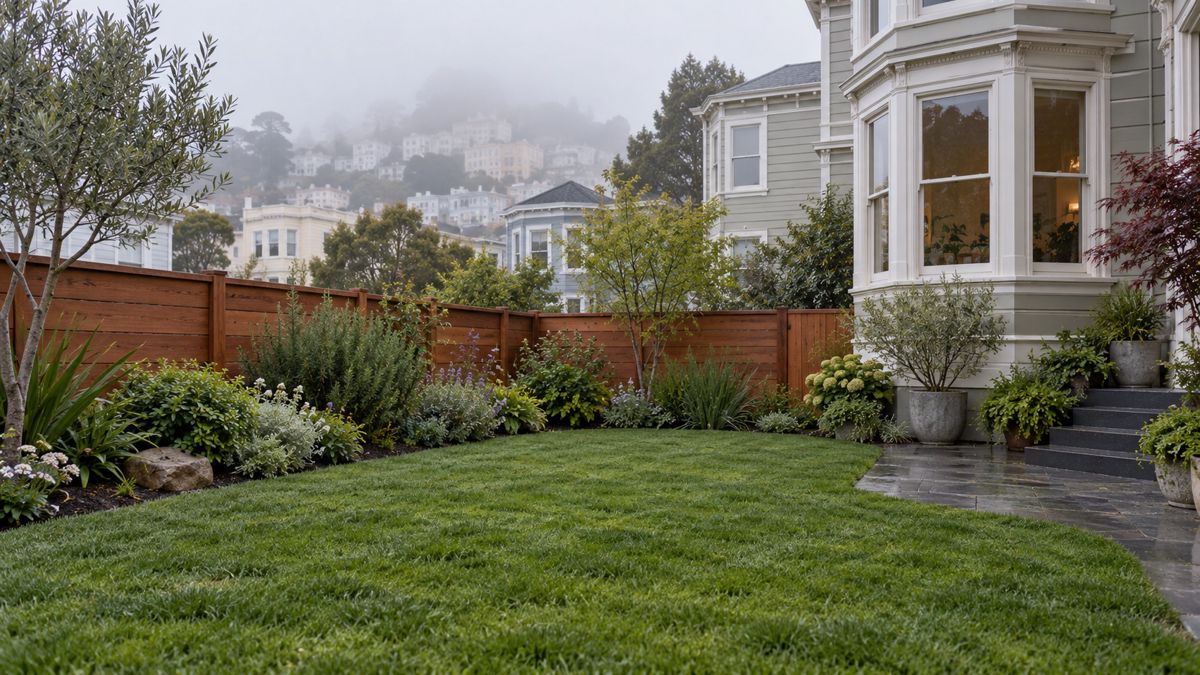
For most San Francisco lawns, the safest choice is a cool-season grass. Tall fescue blends and perennial ryegrass mixes handle mild summers and damp air well, fine fescues cope with shade, and Kentucky bluegrass can work in the sunnier parts of the city. Heat-loving grasses usually do poorly here. The rest of this post explains why, and how to get a lawn started properly.
Why is San Francisco a tricky place for a lawn?
Grass cares about temperature, light, and water, and San Francisco is unusual on all three. Summers are cool, often with fog that burns off late or not at all in the western neighborhoods. Winters are mild and wet. Between late spring and fall, rain is rare. Wind off the ocean dries the leaf surface quickly, even when the air feels damp.
Conditions also change a lot from block to block. A yard in the Sunset may stay foggy and breezy for most of the summer, while a yard in Noe Valley or Bernal Heights may get more sun and warmth. Add tall fences and neighboring buildings, and many backyards get only a few hours of direct light.
All of this means the grass you pick matters more than it would in a hot, sunny valley. A lawn that suits your block will stay thick with less water and less work.
Which grass types work best on the coast?
Most lawns in the city are made from cool-season grasses. These types grow well in mild temperatures and keep their color through the year in a climate like ours. Here are the main choices.
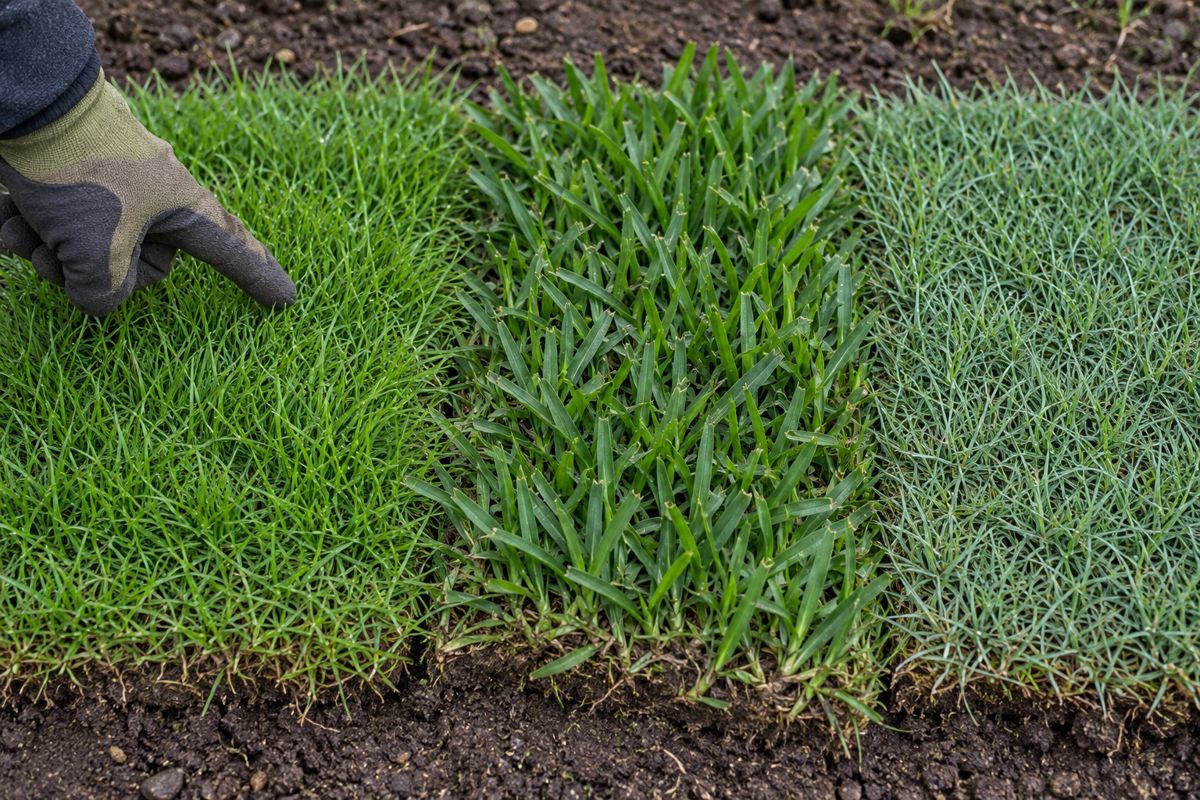
Tall fescue
Tall fescue is a sturdy, deep-rooted grass that tolerates some shade, foot traffic, and dry spells. Modern blends have a finer leaf than older types. It is often the first choice for a family lawn.
Perennial ryegrass
Perennial ryegrass establishes quickly and has a fine, dark green look. It is often mixed with fescue or bluegrass. It likes cool weather, though it needs regular water and does not tolerate deep shade.
Kentucky bluegrass
Kentucky bluegrass makes a dense, soft lawn and can repair itself, but it wants more sun and more water. It suits the brighter, warmer corners of the city better than the foggy west side.
Fine fescues
Fine fescues, such as creeping red fescue, handle shade and poor soil better than most grasses and need less feeding. They do not like heavy foot traffic, so they suit a quiet, shaded lawn more than a play area.
Many sod growers sell blends that combine two or more of these. A blend spreads the risk, because if one grass struggles in a given spot, another carries the lawn.
Which grasses struggle here?
Warm-season grasses such as Bermuda, zoysia, and St. Augustine need heat to grow well. They turn thin and brown in cool, foggy summers and go dormant during the mild winter. They are common in hotter parts of California, but they are usually the wrong choice for a coastal city lawn.
Kikuyu grass does grow in coastal California, and you may see it in older lawns. It spreads aggressively into beds and neighboring yards and is hard to remove, so many landscapers avoid planting it. If you already have it, ask a contractor about the best way to remove it before starting over.
Should you choose sod or seed?
Both can work, and the right choice depends on your yard.
- Sod gives you a usable lawn in a day, holds soil on a slope during winter rain, and leaves little room for weeds. It costs more up front.
- Seed costs less and offers more variety, but it takes weeks to fill in. Birds and wind can move it, and wet weather can wash it away on a slope.
In a small city yard where the lawn gets used right away, many owners choose sod. In a large, flat area where you can wait, seed can be a sensible way to save money. Whichever you choose, the soil work underneath matters just as much as the grass.
How do you prepare the soil and lay sod?
A good sod job follows a clear order of work.
- Remove the old lawn and weeds. Take out the old turf and roots rather than laying new sod over them.
- Loosen the soil. Compacted ground blocks roots. Loosen the top several inches.
- Improve the soil. Mix in compost where the soil is sandy or heavy. Sandy soils hold little water, and clay holds too much.
- Grade the yard. Slope the ground gently away from the house so water does not pool. Fix low spots now.
- Check the irrigation. Put in or repair sprinkler lines before the sod goes down.
- Lay the sod. Stagger the rows like bricks, push the seams tight, and trim the edges.
- Roll the lawn. This presses the roots into contact with the soil.
- Water right away. Soak the new lawn so the soil below is wet.
Sod should be laid soon after it is delivered. Rolls left in a pile begin to heat up and decline.
How do you water and care for new sod in fog and wind?
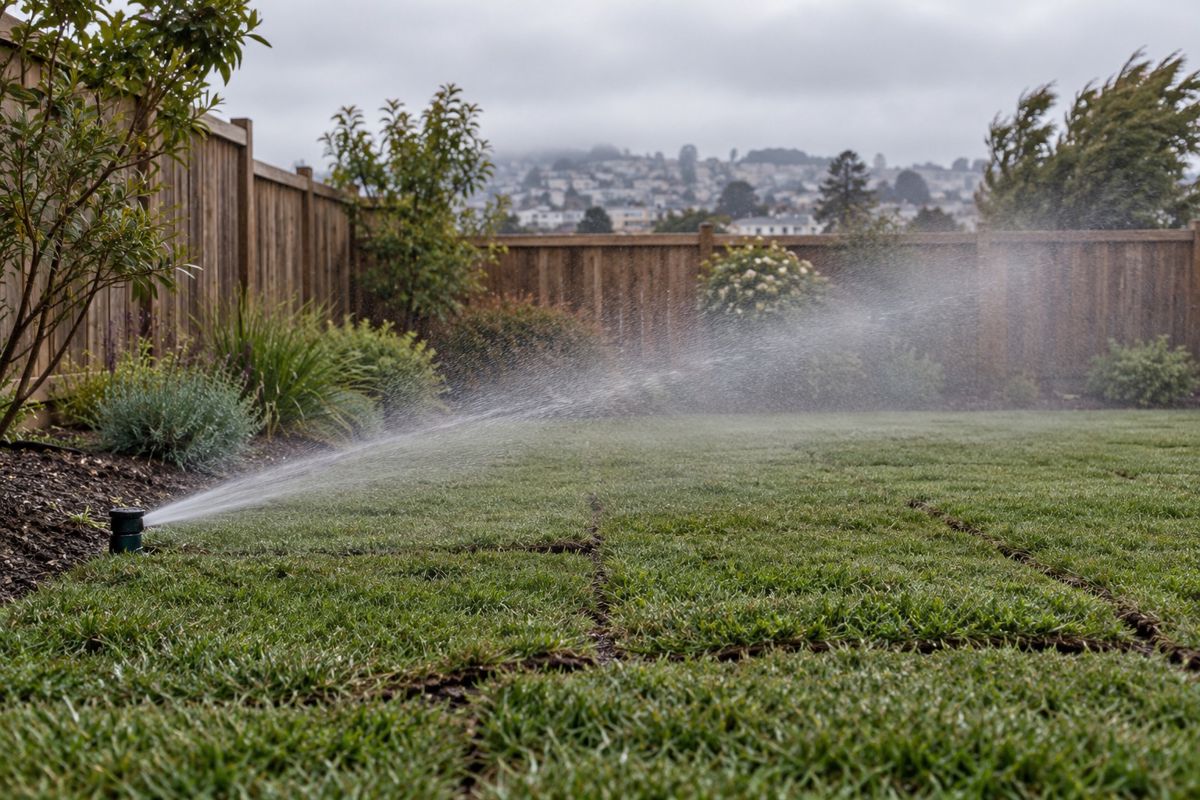
The first few weeks decide whether a new lawn thrives. Keep the soil under the sod moist. At first that often means short, frequent watering, even a few times a day in sunny, windy weather. After the sod roots in, water less often but more deeply, which encourages roots to grow down.
Fog changes the math. On a gray, damp day, a lawn needs far less water than on a clear, windy one, so check the soil with a finger or a screwdriver instead of following a fixed schedule. Overwatering in cool weather invites moss, fungus, and thin spots.
Keep foot traffic off the lawn until the sod has rooted. When you first mow, keep the blade high and do not take off more than a third of the height. Feed the lawn lightly in spring and fall. Wind-exposed lawns may need extra attention along the edges, where drying happens first.
Is a full lawn the right choice for your yard?
A lawn is nice for kids, pets, and a soft place to sit. It is not the only way to make a yard green. Many San Francisco owners keep a smaller patch of grass and fill the rest with drought-tolerant beds, gravel paths, or a paver patio. That uses less water and often looks better in a small space.
Water rules and rebate programs can change, especially in dry years, so check with the water utility before you decide how much lawn to put in. If the lawn is on a slope, ask about drainage and whether a retaining wall is needed.
Ready to replace your lawn?
If your lawn is mostly moss, stays soggy all winter, or has worn thin, a fresh start may be easier than patching. Our sod installation page explains the work, what changes the price, and how to ask for a written quote. When you compare contractors, ask them which grass blend they would choose for the light in your yard, and why. A clear answer is a good sign.